
Does a Subpoena Need to Be Served in Person in California?
Serving a subpoena the right way is one of the key requirements for a subpoena to be considered valid. Therefore, proper service means you must deliver it to the right person and in a manner prescribed by law. In most jurisdictions, personal service is the most common type of service. But, does a subpoena have to be served in person in California?
In California, a subpoena does not always need to be served in person, although personal service is the most common and preferred method. The California Code of Civil Procedure provides various rules for serving subpoenas, depending on the circumstances and the type of subpoena issued. However, the best way to ensure proper service is through a professional process server.
On-Call Legal is your go-to expert for all subpoena services in California and across the nation. With our same-day delivery, you can be sure your legal document gets to the recipient without delay. Schedule a free consultation with us to discuss your subpoena service and guide you throughout the process.
In this article, we’ll cover how a subpoena is legally served in California, what makes a subpoena valid, and important things you need to know.
How Is a Subpoena Legally Served in California?
To serve your subpoena legally in California, it’s essential to understand the legally approved methods for service. That way, you can be sure your subpoena is valid while also complying with the process service rules in your jurisdiction. The methods include:
1. Personal Service

Also known as in-person service or personal delivery, personal service is the traditional and most reliable method in California. Here, a process server physically hands the subpoena to the recipient. The service must be made by someone who is not a party to the case and is at least 18 years old. The person serving the subpoena must also identify themselves and explain the nature of the document.
Also, the subpoena must be served within a reasonable time before the court hearing or the date they’re required to produce documents. This allows the recipient enough time to prepare, appear as a witness in the legal proceeding, or produce the required documents. The specific required timing may vary depending on the type of subpoena and the distance the recipient needs to travel.
Additionally, the recipient has the opportunity to ask questions, seek clarification, or address any concerns immediately upon receiving the subpoena. With the opportunity for interaction, it’s easier for the subpoenaed person to understand the significance of the document and the obligations it requires.
2. Substituted Service
You can use substituted service when personal service isn’t working after several attempts. If you cannot reach the intended recipient directly, you can leave the subpoena with a responsible adult at their home or work. Then, you mail a copy to the same address.
There are stricter requirements for proving service of subpoena via substituted service. Such requirements include showing proof of attempts at direct service and ensuring the substituted service is likely to notify the person effectively.
3. Mail
Sending a subpoena through the mail typically requires using registered or certified mail to ensure there is proof of delivery. The sender must include a return receipt or another form of acknowledgment that the recipient signs upon receiving the document.
Furthermore, mail service offers convenience for both the sender and the recipient, particularly when they are located far apart. However, there is a possibility that the subpoena might not be delivered or that the subpoenaed party might refuse to acknowledge its receipt. In such cases, the requesting party may need to use an alternative method of service to ensure the subpoena is legally served.
4. Electronic Service
Here, the sender emails or faxes the subpoena to the recipient. To be valid, the sender must obtain the consent of the recipient via a written notice. This agreement should clearly state which documents the recipient is willing to receive electronically.
Electronic service is particularly useful for parties in different locations due to its speed and cost efficiency. However, it’s important you ensure the security of the electronic delivery method and obtain verifiable confirmation of receipt.
Who Serves Subpoenas in California?
Not just anyone can serve a subpoena. The law requires a neutral third party who is at least 18 years old and not involved in the case to handle the service.
Professional process servers are the most reliable option. They specialize in delivering legal documents and ensuring service is legally compliant. In criminal cases, law enforcement officers, such as sheriffs or marshals, may be responsible for serving subpoenas. Attorneys and court clerks can also issue and serve subpoenas in some situations. Additionally, any competent adult who is not a party to the case can serve a subpoena, but they must follow California’s strict service rules to ensure validity. We will have a look at these rules in the next section of this article.
While it may be tempting to serve a subpoena informally, using a professional significantly reduces the risk of improper service, making sure the recipient cannot challenge it in court.
California Subpoena Service Rules
California’s subpoena service rules form a complex framework designed to balance efficiency with fairness. They are rules or requirements you must fulfill to ascertain that the subpoena service is legally valid. They are typically designed to uphold the rights of all parties involved and to ensure that the person subpoenaed gets proper notice of the court order. In addition, Section 1985 of the Code of Civil Procedure outlines the California subpoena service rules, detailing procedures for issuing, serving, and responding to subpoenas in the state. Here’s a breakdown of the main rules:
Issuance by Authorized Person– A subpoena must be issued by an authorized entity to be sure the subpoena has legal authority. Authorized people include a court clerk, a judge, or a licensed attorney actively involved in the legal case.
Proper Service Method– California law allows for several methods of serving a subpoena, including personal delivery, mail with a return receipt for proof of service, substituted service, and electronic service. Any method you choose must comply with the California Code of Civil Procedure.
Reasonable Time– The party receiving the subpoena must be given enough time to comply with the subpoena. This means they should receive the subpoena and accept service early before the required date of appearance or document production. Such early service allows them adequate time to prepare or to object to the subpoena if necessary.
Accurate and Detailed Information– The subpoena must clearly identify the court case and provide detailed instructions on what is required of the recipient. It must specify whether it’s appearing in court (witness subpoena), a deposition (deposition subpoena), or producing documents (subpoena duces tecum). It should also specify the date, time, and location for compliance.
Payment of Witness Fees– If the subpoena requires an individual’s personal appearance in court or at a deposition, California law requires the payment of a witness fee and mileage (if applicable) at the time of service. This is to compensate for the time and expenses incurred by the individual in complying with the subpoena. As a result, some witnesses may ask to be paid $35 a day and $0.20 per mile each way.
Compliance with Privacy Laws and Protection of Sensitive Information– When requesting the production of documents or personal information, the subpoena must comply with privacy laws and ensure the protection of sensitive information. This includes adhering to the Health Insurance Portability and Accountability Act (HIPAA) for medical records and other applicable privacy legislation. It’s recommended to confirm the privacy laws guiding business records and other legal documents in your jurisdiction.
Allowing for Objections– The subpoenaed party has the right to object to the subpoena if they believe they have a legally valid reason. Such reasons may include when the subpoena is overly broad, unduly burdensome, or infringes on their rights or privileges. The legal process must provide an avenue for these objections to be heard and resolved.
What Happens if a Subpoena Is Not Served Properly?

Serving a subpoena the wrong way can result in several significant consequences that may affect the party issuing the subpoena, the intended recipient, and the court hearing in general. The potential consequences include:
Invalidation of the Subpoena
If a subpoena is not properly served according to the legal requirements in California, it may be considered invalid. This means the court or administrative body may not enforce it. So, the requesting party may not get the witness or documents they need for their legal claims.
Potential for Sanctions
If the improper service is deemed to be a result of negligence or an attempt to bypass legal procedures, the issuing party could face sanctions or penalties from the court. Sanctions can include fines, the payment of the opposing party’s legal fees, or other penalties deemed appropriate by the court.
Loss of Critical Evidence
You may lose access to very important evidence if the subpoena duces tecum issued is invalidated. Likewise, improper service may also cost you important witness testimonies if the recipient does not accept your subpoena. These may affect the progress of your claims if the evidence is critical to the case.
Impact on Legal Rights
Improper service can impact the legal rights of the recipient, particularly if it leads to inadequate notice or the inability to prepare for or respond to the subpoena. This can raise issues of unfairness and undue process, potentially leading to appeals or other legal remedies.
Compromised Privacy and Security
In cases where personal or sensitive information is involved, improper service can lead to privacy breaches or the unauthorized disclosure of information, especially if the subpoena is served to the wrong person or entity.
How to Ensure Proper Service of a Subpoena in California
Serving a subpoena correctly is important because it determines whether the court will enforce it. If you do it improperly, it could be challenged, ignored, or even quashed. So, to ensure proper service, you must follow California’s legal requirements carefully.
First, choose the right service method. California law allows personal service, substituted service, service by mail, or electronic service with consent. While personal service is the most reliable and commonly accepted method, you can use other options when direct delivery isn’t possible. Regardless of the method used, timing is key. The recipient must have enough time to respond or comply, so serving the subpoena well before the deadline is critical.
Hiring a professional process server is the best way to ensure compliance. At On-Call Legal Process Servers we have a team of experienced and licensed process servers who understand California law, follow the proper procedures, and provide proof of service, reducing the risk of legal challenges. So contact us today for your free consultation.
In addition, the subpoena must contain all required information, including the case details, the recipient’s obligations, and any deadlines. Also, you should note that if the subpoena compels someone to testify, California law requires that witness fees and applicable mileage reimbursement be paid at the time of service.
Types of Subpoenas
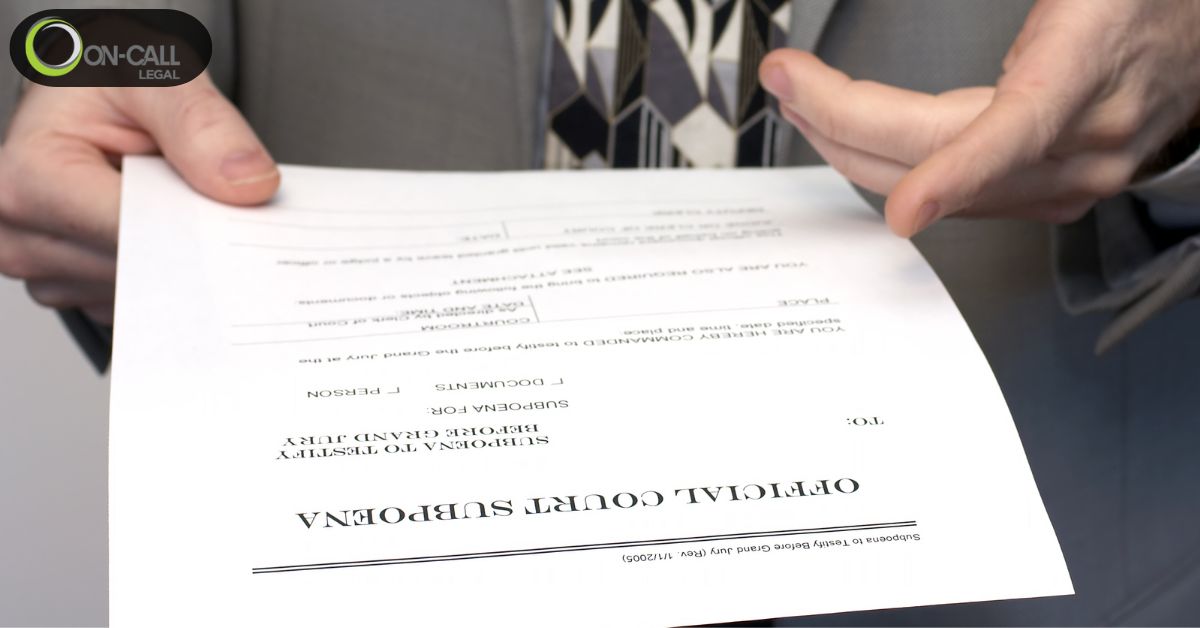
1. Subpoena for Witness
This is the most common type, that compels an individual to appear in court and provide verbal testimony on a specific date and time. This is important in civil and criminal cases, where firsthand accounts from witnesses can impact the outcome.
2. Subpoena Duces Tecum
This type goes beyond verbal testimony. It demands the production of physical evidence like documents, recordings, or objects relevant to the case. It’s often used in conjunction with a subpoena for a witness, providing additional context and support for their testimony.
3. Civil Subpoenas
The California Code of Civil Procedure (CCP) governs the civil subpoena. They are mostly used in civil cases which typically involve disputes between private parties or organizations. These subpoenas compel individuals to provide testimony or produce evidence relevant to the matter at hand, such as in personal injury cases, contract disputes, or family law matters
4. Criminal Subpoenas
The law enforcement or prosecutors issue this subpoena during criminal investigations and prosecutions. This aims to secure the presence of witnesses or the production of evidence to support the prosecution’s case against the accused.
5. Administrative Subpoenas
Government agencies issue this type of subpoena during investigations or hearings related to their regulatory functions. This helps to gather information relevant to their inquiries, like licensing boards investigating misconduct or environmental agencies probing environmental violations.
Differences Between Civil, Criminal, and Administrative Subpoenas
All subpoenas aim at compelling a person to appear in court but not all subpoenas serve the same purpose. Each type serves a unique purpose, operates within specific scopes, and requires certain procedures.
1. Purpose
Civil Subpoenas: Used to collect evidence for lawsuits (documents, witnesses, objects)
Criminal Subpoenas: Used by prosecutors to obtain evidence for criminal cases. This might include witness testimony, physical evidence, and even electronic data.
Administrative Subpoenas: Issued by agencies for investigations or regulatory purposes. For instance, a licensing board might use one to obtain financial records from a business under investigation.
2. Scope
Civil Subpoenas: This has a broader scope than criminal ones, but courts can limit them to prevent undue burden or “fishing expeditions.”
Criminal Subpoenas: The scope is narrow, and focused strictly on relevant case evidence. Prosecutors must demonstrate the requested information is relevant and necessary for their case.
Administrative Subpoenas: Scope varies depending on the agency and its authority but are limited to specific investigations.
3. Issuing Authority
Civil Subpoenas: Judges or court officials upon request.
Criminal Subpoenas: Prosecutors and law enforcement.
Administrative Subpoenas: Government agencies with legal authority.
Need to Subpoena Someone?
In California, a subpoena does not always need to be served in person. There are other legally approved alternatives you can use to serve a subpoena, and they include: substituted, mail, and electronic service. Personal service remains the most reliable and preferred method, as it provides direct confirmation that the recipient has received the document. Failure to serve a subpoena correctly can lead to legal challenges, delays, or even invalidation. To avoid complications, hiring a professional process server is the best way to ensure compliance with California’s strict subpoena service rules.
Proper service of subpoena in California does not have to be a hassle. All you need to do is reach out to our experienced process server at On-Call Legal Process Servers and we’ll help you handle the process. With our dedicated team and thorough understanding of subpoena processes, you can be sure your process service is compliant and valid. Book a free Subpoena Serving Consultation with us today to get started.
Frequently Asked Questions about Subpoenas

1. Do I Need a Lawyer to Serve a Subpoena in California?
While you technically don’t need a lawyer to serve a subpoena, it’s highly recommended. Improper service can render the subpoena invalid, causing delays, challenges, and sanctions. An attorney can ensure everything will go according to legal requirements, saving you time, money, and headaches.
2. How Much Time Do I Have to Serve a Subpoena Before the Court Date?
There’s no single answer as it depends on various factors like the type of subpoena and the distance involved. However, it’s important to give the recipient enough time to prepare and travel if required. Consult with an attorney or check relevant court rules for specific timelines in your case.
3. How to Serve a Subpoena in California
To serve a subpoena in California, you must follow the state’s legal requirements to ensure it is valid and enforceable. This typically involves delivering the subpoena through personal service, substituted service, mail, or electronic service, each with specific rules to guarantee proper notice to the recipient.


On-demand legal services with arranging services from eFiling to organizing and preparing your subpoena for records and/or personal appearance and much more.