
Does a Summons Have to Be Served in Person?
Proper service of summons helps make sure that the summons is valid as the other party receives adequate notice and has sufficient time to respond accordingly. Failing to serve a summons the right way may cause significant delays, additional costs of re-service, or even dismissal of the case. That’s why you need to understand how to properly serve a summons to stay compliant with the rules of service of process in your jurisdiction, whether you’re initiating a case or responding to one as a defendant.
A summons does not always have to be served in person. Although personal service is mostly preferred due to its direct and straightforward approach, you can still serve summons using alternative methods such as service by mail, substituted service, service by publication, and electronic service. Each method may have specific legal requirements in different jurisdictions. Hence, it’s best to work with a professional process server who understands how process service works to avoid improper service.
With over 16 years of experience, On-Call Legal Process Servers understand all the rules and requirements for services of process in California and nationwide. Our experienced process servers are always available to help you deliver your summons and other court documents to the right person anywhere in the country while making sure you stay compliant with all relevant process service rules. Schedule a free consultation with us to discuss your needs and guide you throughout the process.
This blog covers the legally approved methods of serving a summons, the differences between a summons and a subpoena, and other important details you need to know.
Overview of a Summons
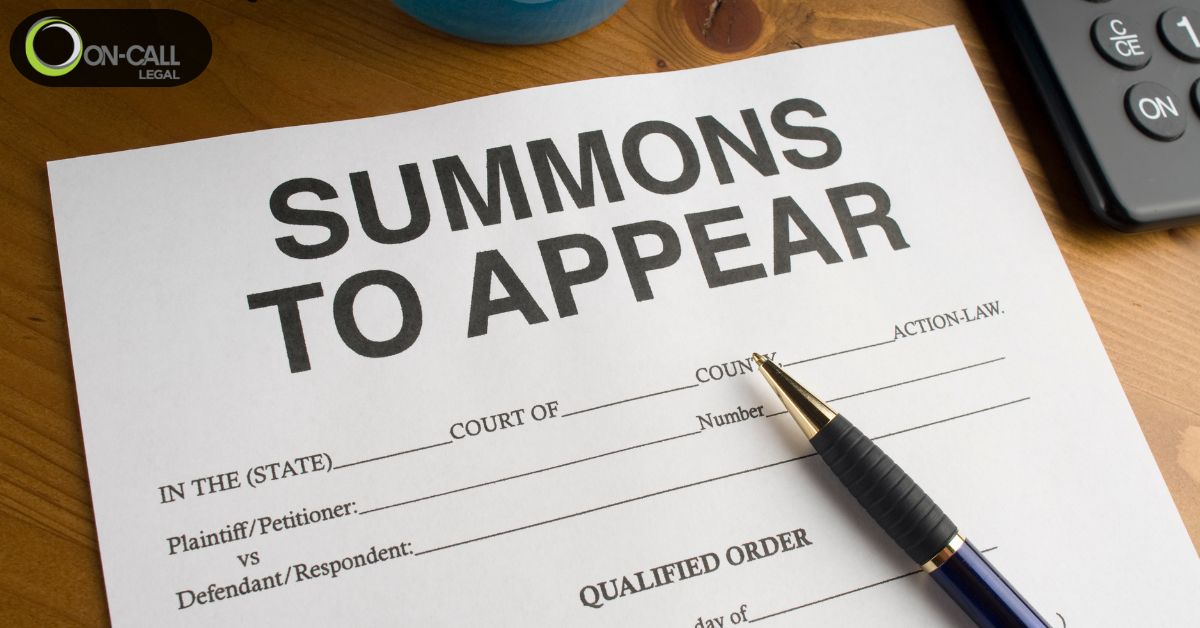
A summons is a legal document issued by a court or government agency to notify a party to a case that they’re required to respond to legal proceeding or appear in court. The aim is to make sure that the party is aware of the legal action and has an opportunity to respond or defend themselves. Summons are often used in various cases including civil cases, criminal cases, traffic violations, small claims, and administrative hearings.
The details included in a summons include:
- The name and address of the court issuing the summons
- The parties involved
- The case number
- The stipulated court date and time for response or court appearance
- Instructions on the expected response
- Stipulated deadlines
- Consequences of non-compliance
- The signature of the issuing authority or court official.
Summons vs. Subpoena: What’s the Difference?
Both summons and subpoenas are legal documents, but each serve a different purpose and are used in different contexts. The primary difference between a summons and a subpoena is that a summons is used to notify a party of a legal action and their expected response, while a subpoena is used to compel the recipient to respond to a legal request, either by testifying in court or producing required documents as evidence.
Moreover, a summons is typically served to defendants in civil or criminal cases, while subpoenas are served to witnesses, experts, or third parties who possess relevant information or evidence regarding the case at hand. Additionally, while failing to comply with a summons may result in a default judgment against the defendant, failing to comply with a subpoena may result in contempt of court charges, fines, or other legal penalties.
Does a Summons Have to Be Served in Person?

No, a summons does not always have to be served in person to be considered properly served. You can serve a summons using other methods such as substituted service, service by mail, service by publication, and electronic service. The methods that are legally acceptable depend on your jurisdiction. This is because local laws and court rules determine the proper methods of service and specify any special procedures for different types of cases.
How Do I Send a Summons?
How you’re required to serve legal papers may differ in various jurisdictions and may also depend on the type of document. You need to understand these differences to be sure you’re compliant with local rules for service of process. The commonly used methods include the following:
1. Personal Service
This is the most common method of serving summons and other court papers. In a personal service, a sheriff, process server, or another authorized person directly delivers the summons to the intended recipient in person. The primary advantage is that the defendant will receive the document physically, providing a sure proof of service. However, personal service can be challenging if the defendant is evasive or hard to locate.
2. Substituted Service
If you’re not able to serve a summons by personal service, you can leave the summons with another responsible adult at the defendant’s home or place of business. This is known as substituted service. Here, the person who is qualified to accept service on behalf of the defendant must be living at the same address or work at the same workplace. Additionally, the process server is required to document the details of who accepted the service and their relationship to the defendant.
3. Service by Mail
You can also serve a summons through certified mail or registered mail if it’s allowed in your jurisdiction. The return receipt requested when you send the summons serves as proof of service. Service by mail is convenient and cost-efficient as you don’t have to pass through the stress of traveling, especially if the defendant is far away from your location. However, you must confirm that your jurisdiction legally approves service by mail before you continue. Additionally, the defendant might refuse to accept the mail, which can complicate the process.
4. Service by Publication
In a case where you can’t locate or reach the defendant after you’ve made reasonable efforts, you can publish the summons in a newspaper or other public medium. For this method, you will need court approval and must publish for a specified number of days or weeks. Service by publication is usually used as a last resort, often in divorce or property dispute cases where the defendant’s whereabouts are unknown.
5. Electronic Service
In some jurisdictions, it’s legally acceptable to send summons through electronic means such as email. It’s also known as e-service and requires court approval or the consent of the intended recipient. The primary advantage of e-service is that it is very fast and efficient. However, you need to confirm that e-service is legally approved in your jurisdiction to avoid the consequences of invalid service.
Can a Process Server Serve a Summons for You?

Yes, a process server can serve a summons for you. In fact, hiring a process server is arguably the best way to make sure that your summons and other court documents are served properly. A process server is a professional who specializes in delivering legal papers to people involved in a lawsuit or legal proceeding. Professional process servers understand the legal requirements for serving a summons to make sure the service is valid, and that you stay compliant with the rules of service of process. Apart from summons and subpoena services, a process server can also offer other legal services and guide you through the process. For instance, On-Call Legal Process Servers provide all-inclusive support services for legal professionals and law firms.
Is a Signature Required When You’ve Been Served a Summons?
In most cases, a signature is not required to validate the service of a summons. However, a signature may be requested to acknowledge receipt. For personal service, the process server may request a signature as proof of delivery, but the service is still considered valid even if the defendant refuses to sign. If you serve summons by mail, you should request a return receipt with the recipient’s signature to confirm that they received the document.
If the defendant refuses to sign or accept the mail, the court may consider alternative methods of service. For substituted service, the person receiving the summons on behalf of the defendant may sign to acknowledge receipt, but the service is valid as long as the process server documents the details of the delivery.
Can You Be Forced to Accept a Summons?
No, you cannot be physically forced to accept a summons. However, the process server can use various legal strategies to make sure that you receive proper notice of the legal action against you, even if you refuse to accept the summons. For example, the process server can leave the summons at your feet, nearby, at your doorstep, or serve by publication if they cannot locate or contact you.
Legal Requirements for Serving a Summons

Different jurisdictions may have varying legal requirements for serving a summons. However, there are general principles and procedures that you can follow to make sure that your service of a summons is legally valid. These requirements include using an authorized process server, following approved methods of service, complying with timing rules, and providing proper documentation to the court.
- A summons must be served by an authorized individual who can be a sheriff, professional process server, or other individual appointed by the court.
- The server must be over 18 years of age and not a party to the case.
- The server must deliver the summons using an approved method of service.
- They must serve the summons within the time specified by the court to ascertain that the defendant gets adequate time to get ready for a response.
- After the service, the server must complete a proof of service form and file it with the court as official documentation that the defendant was notified.
- Similar to the proof of service, the process server provides an affidavit of service, a sworn statement to affirm that the summons was served according to legal requirements.
- When serving a summons to a corporation or business entity, it is usually required to serve the registered agent, an officer, or someone authorized to accept service on behalf of the entity.
- Special rules often apply when serving minors or individuals deemed legally incompetent. Typically, the summons must be served to a parent, guardian, or legal representative.
- Serving a summons internationally requires that you comply with international treaties such as the Hague Service Convention. This may involve additional steps and longer timeframes.
Can I Choose to Just Ignore a Summons?
No, it’s not advisable to ignore a summons as it may attract serious legal consequences. If you ignore a summons or other court papers and fail to appear in court or respond to the legal action, the court may issue a default judgment against you. This means you automatically lose the case. In some cases, you may be required to pay damages, fines, or other financial penalties that the court determines. The court may also take actions such as garnishing your wages, placing liens on your property, or seizing assets to satisfy the judgment.
In criminal cases, the court may issue a bench warrant for your arrest if you ignore a summons. As such, law enforcement can detain you and bring you to court. Even if you accept service, the court may still issue a warrant if you fail to appear in court as required, leading to potential arrest and detention.
Moreover, when you don’t respond to a summons, you waive your right to present your side of the story, defend yourself, or challenge the claims against you. In addition, ignoring legal papers can negatively impact your credibility and legal standing in future cases.
What Happens if a Summons Is Not Served Properly?

Since a summons must be served properly to be valid, improper service of process may result in various legal consequences. First, improper service of court papers gives the defendant legal grounds to challenge the validity of the service in court. The defendant may file a motion to dismiss based on improper service or appeal any judgments made without proper service. If the court confirms that the process serving was not proper, they may deem the summons invalid, and the case may be delayed till you establish a proper service.
If the summons is not served properly, the court may lack jurisdiction over the defendant, meaning the court does not have the legal authority to make decisions affecting the defendant. Additionally, any judgments made without proper service can be reversed or vacated upon a successful challenge or motion to dismiss.
To avoid these consequences, it’s best to make sure you adhere to the specific service rules and procedures of the jurisdiction in which the case is filed. Hand over your documents to an authorized process server who understands the rules and procedures. In addition, strive to maintain detailed records of how, when, and where the summons was served to provide proof of service.
Need to Subpoena Someone?
Although very effective, personal service is not the only approved way to serve a summons. You can serve summons by mail, by substitute service, by publication, or by e-service if allowed in your jurisdiction. Since the approved methods may vary in different jurisdictions, you should find out what works in your jurisdiction to avoid an invalid service. The best way to guarantee that your summons and other court papers are served correctly is to hire a professional process server who is experienced in delivering legal papers in your jurisdiction.
On-Call Legal Process Servers are your go-to experts for summons and subpoena services both within California and nationwide. Beyond process service, we offer all-inclusive support services for attorneys and law firms, including messenger services, document research and retrieval, and concierge services. Book a free consultation with us for professional subpoena services and expert guidance throughout the process.


On-demand legal services with arranging services from eFiling to organizing and preparing your subpoena for records and/or personal appearance and much more.