
How to Skip Trace Someone?
Skip tracing can be incredibly useful, but only if you do it the right way. Despite the goal being locating someone who is hard to find, the methods you use must follow strict legal guidelines. Illegal practices such as using deceptive tactics, accessing private data without permission, or violating privacy laws can lead to serious legal trouble. That’s why it’s so important to understand the proper, legal approach to skip tracing before you begin.
The skip tracing process starts with collecting known details, and then using public records, online databases, and social media to build out the target’s current whereabouts. For more complex searches, it’s best to use professional skip tracing software or hire an expert, especially when time or legal compliance is a factor.
At On-Call Legal Process Servers, we are not only swift at process service. We also offer investigative services with advanced skip tracing techniques to help you locate hard-to-find individuals across California and beyond. Our skip tracing services are always handled by experts to be sure you stay compliant throughout the process. Schedule a free consultation with us, let’s help you get started quickly and discreetly.
In this guide, we’ll break down everything you need to know about how skip tracing works and how to locate someone ethically **reorder. From the best tools to step-by-step methods and when to bring in a professional, you’ll get a complete walkthrough of how to carry out a legal and successful search.
When Is Skip Tracing Necessary?

Skip tracing comes in handy when you need to locate someone who is missing, avoiding contact, or difficult to find. The process can become necessary whenever a missing or unreachable person’s location is key to moving forward with a decision, transaction, or legal responsibility.
For example, when a defendant intentionally avoids being served legal documents, the serving party may hire skip tracers to locate them. Debt collectors and agencies may also use skip tracing services to track a borrower who defaulted on payments and cannot be reached. Other possible situations include finding a missing relative, locating a parent or guardian for family law cases, contacting an absentee landlord (for real estate investors) in a real estate deal, etc.
Is Skip Tracing Legal?
Yes, skip tracing is legal as long as it complies with the applicable privacy laws. Nevertheless, the skip tracing process can be illegal if you engage in skip tracing techniques that are not allowed by law. For example, skip tracers are allowed to look for individuals using public records, online databases, and contact data. But they must not lie, harass, or access private data without permission.
They can ask others for someone’s location, but cannot reveal that the person owes a debt or pretend to be someone else. Deceptive practices like pretexting (pretending to be the person you’re searching for) or using tricks to get sensitive financial details are also illegal.
Additionally, skip tracers must comply with federal and state laws that protect people’s privacy. These laws include the Fair Debt Collection Practices Act (FDCPA), the Gramm-Leach-Bliley Act (GLBA), the Telephone Consumer Protection Act (TCPA), and the Fair Credit Reporting Act (FCRA). Meanwhile, some states like California and Texas have extra rules or require licenses.
How to Skip Trace Legally

What makes your skip tracing both valid and effective is how well you understand the processes involved. That’s why we’ve put together this step-by-step guide that you can follow to skip trace someone legally, ethically, and successfully:
- Start with Known Information – Gather all the details you already know about the person. This may include their full legal name, nickname, date of birth, Social Security number, last known address, previous phone numbers, email addresses, social media handles, and any known employers, schools, or relatives. Although this is limited data, the more complete your starting information is, the easier it will be to narrow down your search.
- Search Public Records and Online Databases – Use public records to gather up-to-date information legally. These include property tax records, court records, arrest logs, marriage records, death certificates, voter registration, and business licenses. You can access many of these records through public record databases or third-party websites. Whatever the case, always double-check the credibility of the sources you use.
- Check Social Media and Online Activity – Many people leave digital footprints through social media platforms like Facebook, Instagram, LinkedIn, and X (formerly Twitter). Look for check-ins, tagged photos, work history, posts from friends, or comments that might give clues to their location or recent activity.
- Use Skip Tracing Software or Tools – Professional skip tracers often use subscription-based software that pulls together public and proprietary data into one place. However, tools like TLOxp, LexisNexis Accurint, CLEAR, and IDI Core are typically only available to licensed professionals, like private investigators or attorneys. For personal use, you can use consumer tools like BeenVerified or PeopleFinder, but results may be limited and less accurate.
- Cautiously Contact Known Associates – If you believe someone close to the target may know the person’s whereabouts, you can reach out, but do so carefully and legally. Contact friends, relatives, former landlords, neighbors, or coworkers, and simply ask if they know how to get in touch. Never lie about who you are or why you’re asking, and never pressure, threaten, or repeatedly call people.
- Cross-Reference and Verify – Mistaken identity is common, so it’s important to confirm you’re looking at the right person. Therefore, always verify the information you find before taking action. People may share names, move frequently, or use outdated profiles. Double-check records from multiple sources, such as comparing a listed address with recent utility records or matching social media photos with known relatives.
- Consider Hiring a Professional – If you’re unable to find the person on your own, or if the situation is sensitive or legally complex, then you should hire a licensed private investigator. If your purpose is to serve someone legal papers, consider hiring a certified process server like On-Call Legal Process Servers, who offer skip tracing services. In all, make sure to choose someone who is licensed, insured, and compliant with federal and state laws.
Best Skip Tracing Tools and Software
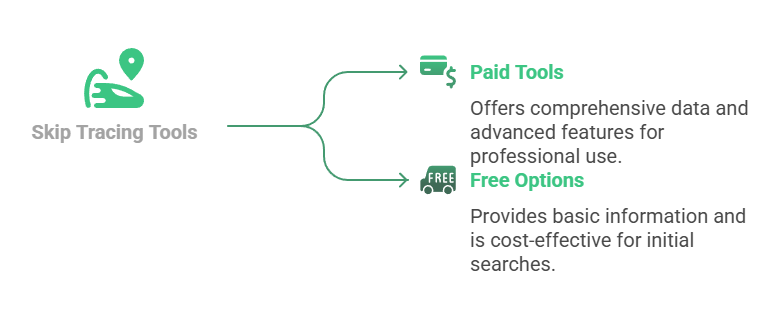
Whether you’re a professional investigator or someone trying to find a person for a legal or personal reason, using the right skip tracing tools can make the process faster and more accurate. With a lot of tools available, both free and paid options, the “right” ones for you depend on the purpose of the skip tracing.
Paid Tools
Here, we’ve listed some viable options, their key features, and pricing, so you can make an informed choice. Let’s start with paid tools:
1. TLOxp (by TransUnion)
TLOxp is a high-powered investigative platform used by law enforcement, legal professionals, bounty hunters, and licensed private investigators. It pulls data from billions of records, including address history, phone call logs and numbers, vehicle records, credit reports, bankruptcies, liens, and associates. The system uses relational analytics to link people, businesses, phone numbers, and addresses.
- Features: Deep data on individuals, business searches, real-time updates, and customizable reports.
- Pricing: No public pricing. It typically requires a monthly minimum and usage-based fees.
- Best For: Law enforcement, debt collection agencies, legal teams, and licensed private investigators who need fast, reliable, and detailed reports.
2. LocatePLUS
LocatePLUS is a user-friendly alternative that offers many of the same capabilities as TLOxp but with a more accessible interface. It is widely used by smaller investigation firms, bail bondsmen, and government agencies.
- Features: Instant access to address history, DMV records, criminal data, and reverse phone, email, and SSN lookups.
- Pricing: Starts around $50–$100/month, depending on access level. Custom enterprise plans are available for teams.
- Best For: Investigators, process servers, small law offices, and skip tracers who want robust data in a more manageable platform.
3. IRBsearch
IRBsearch provides direct access to data, including property records, utilities, and identity information, through a clean, browser-based platform. It’s ideal for private investigators and process servers who need regular access without a steep learning curve.
- Features: Property records, death index and marriage records, relatives and associates, utility listings, employment and business license checks, and nationwide people search with SSN validation
- Pricing: No monthly fee required to sign up. Most users are charged per search or can choose a monthly package ($50–$100+ depending on usage)
- Best For: Solo investigators, small firms, and occasional users who want powerful tools without heavy fees or complexity.
4. LexisNexis Accurint
Accurint is one of the most trusted platforms for government agencies, financial institutions, and legal professionals. It offers extensive linking of personal, professional, and legal data, allowing users to build detailed profiles and find difficult leads.
- Features: Advanced linking of relationships, assets, employment history, identity and fraud risk scoring, batch search for batch skip tracing, and access to real estate, vehicle, court, and business data.
- Pricing: Pricing is customized per organization. Basic plans start around $100/month, with add-ons for enhanced access.
- Best For: Large law firms, process servers, fraud investigators, and enterprise teams that need comprehensive and validated data.
Free Tools
In case you’re tight on budget, you can still consider the following free skip tracing software options:
1. Whitepages
Whitepages offers basic contact info such as phone numbers, addresses, and relatives based on public directory data. At the very least, this information can provide a launching pad for your skip tracing.
- Features: Reverse phone and address lookup, name, age and location matching, relatives and household members.
- Pricing: Free for basic searches; premium subscriptions available starting at $5/month for detailed reports.
- Best for: Quick lookups and verifying basic info before using paid tools.
2. Spokeo
Spokeo pulls together data from online profiles, public records, and marketing databases to show a person’s possible locations, family members, and online presence.
- Features: Social media matching, previous addresses and phone numbers, estimated wealth and lifestyle data.
- Pricing: Free to search but reports cost ~$14/month. Not as reliable or detailed as premium tools.
- Best For: Casual users or people tracing acquaintances, former classmates, or relatives.
3. Social Media Platforms
Facebook, LinkedIn, Instagram, and other platforms can help track down someone’s current location, job, or friends. Even if a profile is private, tagged photos or comments on mutual friends’ posts can provide valuable clues. However, although this option is free and easy, it can also be time-consuming. You may need to piece together information manually.
- Features: Location check-ins and geotags, work and education history, visible friends, relatives, and followers.
- Pricing: Free.
- Best For: Finding recent activity, mutual friends, aliases, or clues that connect online behavior to real-world locations.
4. County Court and Property Assessor Websites
Local government websites often offer free searches for legal filings, tax records, eviction cases, and property ownership. These records can reveal where someone lives, what they own, or if they’ve been involved in legal disputes.
- Features: Court case status and dates, deed transfers and address history, tax assessments and mailing addresses, liens, and legal disputes
- Pricing: Free.
- Best For: Verifying address information, finding property owners (for real estate agents), or legal issues tied to a person.
When to Hire a Professional Skip Tracer

Hiring a professional skip tracer becomes the best choice when a search becomes too complex, time-consuming, or legally sensitive to handle on your own. While free tools and basic online searches can help you find someone in simple cases, some situations require deeper expertise, access to restricted data or specialized databases, or legal compliance that only a trained professional can provide.
If you’ve already tried public records, social media, Google search and other search engines, and online directories without success, a professional can dig deeper. They use powerful databases and investigative skip tracing techniques not available to the general public.
Furthermore, certain searches, like those involving debt collection, court proceedings, or background checks, require strict adherence to federal and state laws such as the FDCPA, FCRA, and GLBA. A licensed skip tracer knows how to navigate these legal boundaries safely.
Moreover, if you’re dealing with time-sensitive issues, such as serving legal documents before a court deadline, finding a missing witness, or recovering a large debt, hiring professional skip tracers is a good option to consider. Keep in mind that they can work quickly and accurately to deliver results without delays.
Remember that people who don’t want to be found often go to great lengths to erase their digital footprints. Professionals are trained to uncover false leads, identify aliases, and find connections that typical searches might miss.
In addition, consider hiring a professional skip tracer if you lack time or resources, especially when dealing with multiple data sources. If you’re not experienced or simply don’t have time to sort through records, hiring a professional saves effort and increases your chance of success.
Need Assistance With a Hard-to-Find Individual?
Successful skip tracing is a combination of research, legal awareness, and smart use of technology. Whether you’re working with basic public data or using advanced search tools, following a clear, legal process increases your chances of finding someone successfully. Always verify information before taking action, and be sure not to cross privacy lines. Remember, when it comes to skip tracing, what you do is just as important as how you do it.
If your case involves legal obligations, time-sensitive matters, or limited access to quality data, hiring a professional skip tracer is the smartest move. On-Call Legal Process Servers offer skip tracing services handled by trained professionals who know how to find people quickly and legally. Let us take the burden off your shoulders. Contact us today and get expert help locating even the hardest-to-find individuals.
FAQ
What is the best way to skip trace?
The best way to skip trace is to hire a professional skip tracer, especially for complex or legal cases. Otherwise, combine public records, social media, and professional skip tracing tools.
How to be a skip tracer?
Start by learning legal research methods, privacy laws, and investigative techniques. Many professionals get licensed as private investigators or work in collections, law, or real estate.
Is skip tracing easy?
It can be easy for simple cases using online tools, but harder when the person is hiding or has a limited digital presence. Complex searches often require time, skill, and legal knowledge.
Who can use skip tracing?
Anyone with a lawful purpose can perform skip tracing, including individuals, businesses, or legal professionals. However, access to certain tools and data is limited to licensed or authorized users.
What does skip tracing solve?
Skip tracing helps locate missing, evasive, or hard-to-reach individuals. It’s used in debt collection, legal cases, real estate, and reconnecting with family or contacts.


On-demand legal services with arranging services from eFiling to organizing and preparing your subpoena for records and/or personal appearance and much more.