
What Do Process Servers Deliver?
A process server is a person whose job is to serve court papers to people or parties involved in legal proceedings. Process servers deliver legal documents to notify an individual or an entity of a civil action against them. Process serving makes sure all parties know about the case and what they need to do.
At On-Call Legal Process Servers, we are your comprehensive solution for all your attorney and messenger needs, boasting a track record of repeated successes for over 15 years. Get in touch to speak with a member of our team today to experience our top-notch process service!
In this article, we’ll explore what process servers deliver, the types of legal papers, the importance of proper service, and choosing a reliable process server.
What Is a Process Server?

A process server is a licensed professional who delivers court documents to entities involved in legal procedures. This ensures all parties are notified of any legal actions against them or required of them. They ensure compliance and provide proper notice. Their work supports a fair legal process.
There are five main methods of legal delivery, namely, direct personal service, substituted service, certified or registered mail, electronic service, and publication service. The direct personal service is usually the go-to method because it ensures the person receives the papers. The substituted service sees that the documents are left with a responsible adult in the person’s household, while certified mail uses the postal service with tracking and signature confirmation. For electronic service, it could be achieved through the use of an email. But it is important to note that it is only valid in certain jurisdictions. Publication service is usually used as a last resort when all options have been exhausted. The notice is always published in a court-approved newspaper.
Properly serving documents in legal proceedings goes beyond just handing over an envelope. It’s an important step that can make or break a case. A professional process server is the best choice because they ensure legal accuracy and provide reliable proof of service. Plus, they deliver documents faster, more efficiently, and sometimes employ the aid of private investigators. This increases the chances of success.
What Do Process Servers Deliver?
It is important to understand that process serving plays a key role in facilitating legal proceedings. A process server helps maintain fairness and equity in the legal system by delivering legal documents to intended recipients. These legal papers may include summonses and complaints, subpoenas, court orders, eviction notices, divorce papers and family law documents, protective and restraining orders, and child custody orders.
Summons and Complaints
A summons is a document that notifies the concerned party of a lawsuit against them. It contains clear case details about the lawsuit, the court information, and the actions required by the defendants. A superior court can issue a summons, either through its judicial side or its administrative body. The summons will list the specific date or deadline for a response.
Additionally, a complaint is a legal document served along with a summons. It specifies the actions, or lack thereof, that prompted the court proceedings.
A process server’s main purpose is to give the defendant enough time to respond to their obligations or defend against allegations. This means that they must be served as early as possible. In civil cases, summons deadlines are 21 days after service for federal court, and for state courts, it is 20 to 30 days after service.
Subpoenas
A subpoena is a legal document that orders someone to appear in court. This can be to testify as a witness or to provide documents and evidence related to the case. There are three main types of subpoenas, which are listed below:
- Subpoena ad testificandum: This order tells a person to appear and testify. They may do this in court, at a deposition, or in another official setting.
- Subpoena duces tecum: This requires a person to release specific records or produce documents that could be admissible as produced evidence in a case.
- Combination subpoenas: A subpoena can require someone to show up and bring documents.
For a subpoena to be valid, the serving party must ensure the method of service is in line with the court rules. A process server serving a subpoena incorrectly, to the wrong person, or missing any steps can hurt your case.
Court Orders
A court order is a legally binding directive issued by a judge or a court. It requires someone to do or stop doing a specific act. It is backed by the law, and ignoring it can bring about legal consequences.
There are four major types of orders, which are temporary orders, permanent orders, emergency orders, and consent orders. Examples of orders issued by the court are restraining orders, child custody orders, and eviction notices. Court orders can be grouped into two classes, which are prohibitive orders and mandatory orders. Prohibitive orders or injunctions stop a person from taking an action, whereas mandatory orders compel a person to act.
Eviction Notices
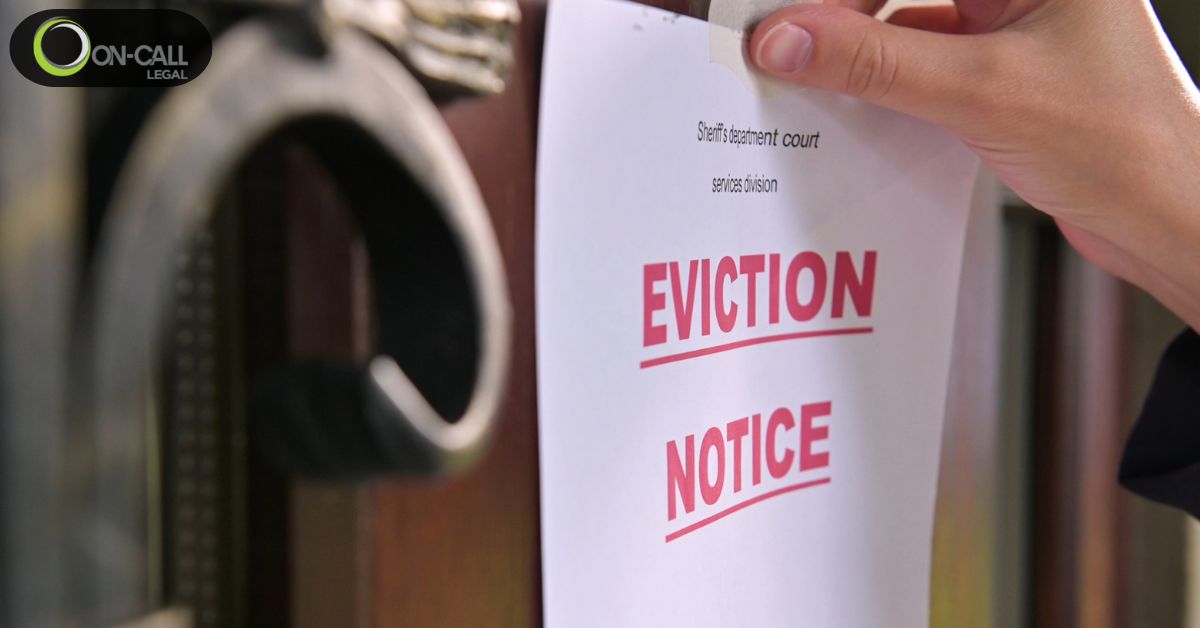
An eviction notice is a written document that a landlord gives to a tenant to inform them that they must correct a violation, usually a default on rent, or leave the property by a specific date. Some of the most common reasons for issuing eviction notices include nonpayment of rent, violation of agreed terms, illegal activity on the premises, etc.
It is important to note that for all eviction notices to be valid, there must be a correct service of process. The most common ways of delivery are in person and certified mail.
Divorce Papers and Family Law Documents
This may include divorce decrees, custody arrangements, or support papers. A divorce decree is the final court order that officially ends a marriage. It also specifies the terms of the divorce. It covers key details like debt allocation, asset division, spousal support, and child support. Both parties must follow the divorce papers as required by law.
Courts in the United States have strict rules for process servers. If not done correctly, your process serving could be invalid. Therefore, it is advisable to get a professional process server in divorce cases to serve papers. If the process serving is invalid due to misconduct or late delivery, the divorce proceedings may be delayed or even dismissed. Using a professional process server to deliver the papers can save you money and avoid legal issues.
Other Legal Notices
Process serving also covers legal communications like liens, judgments, protective, and restraining orders. Firstly, a lien is a claim to a debtor’s property or other assets. Usually, when giving out loans, creditors require collateral. If a debtor fails to satisfy the obligations, then the creditor can enforce the lien to seize or sell the asset. Liens can also be established through court judgments and by government entities for reasons such as unpaid taxes.
Furthermore, a judgment is the court’s final decision in a legal case. It settles disputes between people and explains their rights and duties. Lastly, protective and restraining orders are court documents that help keep people safe from harm or harassment. These are generally issued in cases of offenses such as sexual assault, stalking, domestic violence, and other forms of harassment. It prohibits the alleged abuser from getting close, making contact, or communicating with the victim in any form. This typically includes restricting the abuser from going to the victim’s home, school, or workplace. The main goal is to keep people with harmful or dangerous behaviors away from potential victims.
However, there are legal papers that process servers are not permitted to serve. A notable example of this is an arrest warrant, which a sheriff is required to serve. Therefore, it is best to ensure proper inquiries are made concerning your case before proceeding.
How Process Servers Deliver Legal Documents

Process servers serve legal papers according to court rules. This way, the recipient can’t later say they weren’t properly notified. There are various methods of process serving, including personal service, substituted service, service by posting and mail, service by publication, and electronic service.
Personal service is when legal documents are physically given to the person named in the papers. It is considered the most reliable form of service of process. On the other hand, substituted service is when legal documents cannot be delivered directly, so they are left with another responsible adult.
Furthermore, service by posting and mail is a method of delivering by posting at a visible spot on the defendant’s property and mailing a copy to their address, whereas a service by publication is carried out by publishing a notice in a newspaper when the defendant cannot be located. Finally, electronic service is delivering legal documents to a defendant electronically, either by mail, online court portals, or other electronic methods approved by the court.
Legal requirements for a valid service of process include delivering to the proper person or entity, hiring an authorized server, having correct documents, using an approved delivery method, ensuring proper jurisdiction, ensuring timely service, and providing proof of service.
How Long Does It Take to Serve Legal Documents?
The time it takes to serve legal documents can vary greatly, from a day to several weeks or even months. Factors such as the recipient’s location, availability, cooperation, legal deadlines, and the methods of service used can all affect the timing.
If a service of process isn’t completed before the deadline stipulated by the court, the legal case may be dismissed. Also, some legal matters rely on immediate service for legal actions to proceed.
How to Choose a Reliable Process Server
Process servers play a crucial role in the justice system. Hence, picking a reliable process server is very important because anything otherwise can delay or ruin your case. Therefore, it is important to hire a process server with a proven track record.
In order to pick the right one, the first step is to verify credentials because, in many states, process servers must be licensed for service to be valid. After which, you check experience and reputation. The more years under their belt, the less likely they are to make costly mistakes. Also belonging to an association like NAPPS is a good sign of a great reputation.
The next step is to ask about procedures. To be sure they know what they are doing and how to go about it, ask various questions like how they handle people refusing service, serving in gated communities, and so on. Before hiring, confirm the documentation standards and proof of delivery services offered. You must ensure they prepare a proper proof of service, as mistakes can invalidate service.
Also, it is advisable to look out for cost transparency. Get a clear pricing scheme showing flat rates and increments per attempt. Lastly, check reviews. You can go online to check for ratings or testimonials from others who may have used their services previously.
How Much Do Process Servers Charge to Deliver Legal Documents?

The fees being charged by process servers vary depending on urgency, service method, difficulty of service, and location. Regardless, the typical price is $45 to $90 for standard service, $75 to $150 for rush service, and $100 to $250 for hard-to-serve cases.
Additional costs for a difficult service include stakeout fees of $75 and a notarized affidavit that costs around $10 to $20 if needed.
Searching for a Dependable Process Server?
Process servers convey legal papers like subpoenas, summonses, complaints, eviction notices, and court orders. Process servers serve these documents to individuals or organizations involved in legal cases. Their role is crucial. Proper service of process makes sure all parties know about legal actions against them, and this is essential for due process. Without the service of process, court hearings cannot proceed in a lawful and enforceable way.
In a service of process, it’s always best to get it right on the first try. So why not partner with professional process servers who have a proven track record? On-Call Legal Process Servers has process servers across the country ready to help. You can visit any of our three offices in Southern California for a consultation. Contact us to get started!
FAQs
People often have questions about the duties and responsibilities of process servers. Below are some of the most recurring ones.
How Long Do Process Servers Usually Take?
Process service might take a few days to several weeks, depending on many factors. The behavior of the recipient plays a big role. If a person is cooperative, a process server may be able to serve them court documents within a day or two. The type of service, the recipient’s location, and the laws involved all impact how long process service takes. Some California courts can set deadlines for process service. These deadlines are usually between 60 and 90 days.
Can Process Servers Deliver Documents to Anyone in the Household?
If the process server can’t deliver the court documents in person, they can get court approval for an alternate service. The process server can leave the documents with another adult at your home or work. This could be a family member or a coworker.
What Happens if Someone Refuses to Accept the Papers?
If someone refuses to accept the legal papers served, the court may approve alternative service methods. You have three choices, which are substitute service, certified mail, and publishing a notice in a newspaper. If you don’t respond, the court can issue a default judgment against you. This can happen even if you didn’t receive the papers from a process server personally.
How Long Does the Process Server Attempt Delivery?
It often depends on a few factors: the state’s legal system, the urgency of the case, the recipient’s location, the client’s wishes, and the costs of serving the process.
Are Process Servers Allowed to Serve Documents After Hours?
This generally depends on the state in question. In California, for instance, a process server can serve legal documents at almost any hour of the day. The usual hours are reasonable, usually from 6:00 a.m. to 10:00 p.m. Process servers aim to avoid inconvenient times, like late at night or very early in the morning. Process servers adhere to these hours to carry out the service of process in a respectful manner that does not disrupt the person being served.


On-demand legal services with arranging services from eFiling to organizing and preparing your subpoena for records and/or personal appearance and much more.