
Who Can Serve Court Papers?
Court documents must be served correctly to guarantee that judicial processes proceed efficiently and fairly. It is a basic right in the legal system that all parties concerned should be notified of legal actions against them, and proper service of process ensures this. Ensuring the integrity and effectiveness of legal proceedings is essential for both legal firms and individuals. Delays, dismissals, or other issues brought on by incorrect or inappropriate service may negatively impact a case’s results.
Various parties can serve court documents, including sheriff’s officers, court-appointed process servers, and professional servers. Any adult over 18 can sometimes serve the documents, but local legislation is crucial as specific requirements may vary.
On-Call Legal Process Servers specializes in efficient and precise services of process, ensuring legal actions are executed correctly. Our expertise ensures documents are served correctly, upholding case integrity. For reliable service of process and to safeguard legal interests, contact us today. Let us handle your legal paperwork with professionalism!
This blog will explain who can legally serve court papers, including the roles of private citizens, law enforcement, and professional process servers. It will also address the risks of improper service and offer efficient solutions for correct service. Additionally, the blog will cover various document types and methods of service.
The Importance of Court Papers

Formal legal documents, called court papers, are used to initiate, cease, or monitor legal actions. Because court documents formally convey requirements and legal activities, they are vital to the legal process. They make sure that all parties to a case are informed of legal proceedings and have the opportunity to engage with the judicial system and reply accurately.
Process servers serve various papers, including summonses, subpoenas, complaints, and writs—each with a specific function. A summons informs a defendant that they are the subject of a lawsuit. A subpoena calls for testimony or proof from the other side. A writ is a court order that directs particular activities, including enforcement or compliance, while a complaint is a list of the allegations presented in a case.
Maintaining the effectiveness and fairness of the legal system depends on ensuring that court documents are served correctly. Precise delivery ensures that all parties receive the required notice, reducing the likelihood of delays, dismissals, or other problems that might harm the case’s conclusion.
Who Can Serve Court Papers?
Various people, including professional process servers, law enforcement officers, and private individuals, can serve court documents. Each option has its guidelines, advantages, and restrictions.
1. Professional Process Servers
Professional process servers are qualified individuals committed to timely and correctly delivering court documents. Our skilled and competent process servers at On-Call Legal Process Servers provide dependable service that preserves the judicial system’s integrity.
Professional process servers have several advantages, such as prompt delivery, compliance with legal standards, and experience in identifying beneficiaries. However, they must fulfill particular licensing and certification requirements to verify their eligibility for this vital responsibility.
2. Law Enforcement Officers
Sheriffs, deputies, and police officers can also serve court documents. In many cases, they are either needed or desired, such as when managing high-risk customers or legal procedures. However, despite their strength and experience, limitations occasionally constrain law enforcement officials because of their availability and potential conflicts of interest in civil matters.
3. Private Individuals
Court papers can be served to private individuals by friends or family members above 18 who are not participating in the case. This option does have a few constraints and disadvantages, such as the need to make sure all documentation is in place and prevent any disputes over the service’s legality. Private persons are subject to strict standards and limitations to ensure the legal recognition of the service.
How to Find Someone to Serve Legal Papers?

Although it can be difficult, a few tactics can help you have a better chance of success when serving court documents to evasive or hard-to-locate people. The following are several strategies on how to find someone to serve court papers:
- One useful strategy is skip tracing, which is a technique used by expert process servers to find people using social media, databases, and other research resources.
- Another strategy is monitoring, in which the server monitors the person’s daily activities in search of opportunities to assist.
- When all other possibilities have been explored, and the person’s whereabouts are unknown, alternative techniques such as service by publication may be employed.
How to Hire a Professional Process Server?
You must know how to hire a process server to ensure that your legal documents are served correctly and following the law. Use the following steps to find and employ the best process server:
- Research and Referrals: Search for local process servers online or contact attorneys for recommendations. Seek out businesses with a solid track record and good testimonials.
- Verify Credentials: Ensure the process server has the necessary permits and certifications to work in your community. This ensures that they are aware of local laws and regulations and that they fulfill the relevant legal requirements.
- Request a Consultation: Speak with relevant process servers about your particular requirements. Inquire about their track record, percentage of success, and strategies for helping those who are hard to find.
- Compare Costs: To compare expenses, get estimates from many process servers. While cost is crucial, consider the level of service and knowledge provided.
- Check for Insurance: Verify the process server’s insurance coverage to guard against any mistakes or problems that can arise during their services.
Questions to Ask Before Hiring:
- How much experience do you have in serving the type of court papers I need to be delivered?
- How do you deal with evasive or challenging recipients?
- Are you able to give testimonials from past clients?
- What are your prices, and what is included in the cost?
- How are you going to offer proof of service?
For those who need reliable and efficient service, On-Call Legal Process Servers are here to help. Contact us today to ensure your court papers are served correctly and on time.
Legal Requirements for Serving Court Papers

For the procedure to be legitimate, the legal document must be served correctly and according to certain legal standards. Although these regulations vary among jurisdictions, they usually contain rules about who can serve documents, where and when they can be served, and how the service has to be recorded.
General Requirements
Legal criteria for serving court documents include the serving person’s age and competency—usually, they must be at least 18 years old and not a party to the case. Geographic limitations also exist; for instance, several jurisdictions mandate that documents be served inside the state or region where the matter is being handled. Understanding these basic requirements is vital to prevent the service from being invalid.
State and Local Regulations
There are specific regulations regarding serving court documents in every state and locality. For example, if a process server serves more than ten papers annually in California, they must register. You must follow the particular regulations in your location because different jurisdictions have different laws. Compliance with these laws is essential to guarantee that the service is accepted by law and is enforceable.
Timing and Location Restrictions
Depending on the jurisdiction and nature of the document, there are time limits within which court documents must be served. Furthermore, the locations in which papers can be served are restricted. For instance, some sites, like houses of worship or particular times of the day, can be off-limits. It is essential to comprehend these time and location restrictions to perform the service accurately and avoid legal trouble.
Methods of Serving Court Papers

The appropriate technique for serving court papers is essential to guarantee legal compliance and efficient delivery. Different strategies are necessary in different situations, and each has its own set of guidelines and specifications.
Personal Service
The most straightforward and preferred approach is to deliver court papers by personal service. This includes providing the recipient with the paperwork in person and ensuring they are fully informed about the legal action.
This method often becomes necessary in cases like summonses or subpoenas when verifying that the subject received the documents is crucial. The server usually identifies the receiver, describes the documents to them, and then hands them on.
Substituted Service
In situations where providing human service is not feasible, perhaps due to the recipient’s avoidance of service or other unavailability, substituted service becomes necessary. In this situation, you can serve papers to another responsible person at the recipient’s home or employment.
An alternative would be to leave the paperwork in a noticeable location, such as taped to the front door. This technique necessitates further action, such as mailing a copy of the papers to the receiver’s last known address, to ensure appropriate alertness.
Service by Mail
Serving someone by mail is a practical method that can be used under certain conditions, usually if both parties agree or the court approves. The documents are delivered by registered or certified mail; a return receipt is needed to prove that the receiver received them. This approach is frequently employed when the parties participate in the legal procedure or for less important documents.
Service by Publication
When all reasonable attempts have been made to discover the receiver, but they remain unlocated, service by publication is the final alternative. As part of the procedure, a notice must be published in an approved newspaper or other public forum within a time frame set by the court.
Even if the person is lost, this approach guarantees that the legal need to inform is fulfilled. Service by publication is usually only permitted after all other options have been explored since it can be expensive and time-consuming.
Legal Consequences of Improper Service
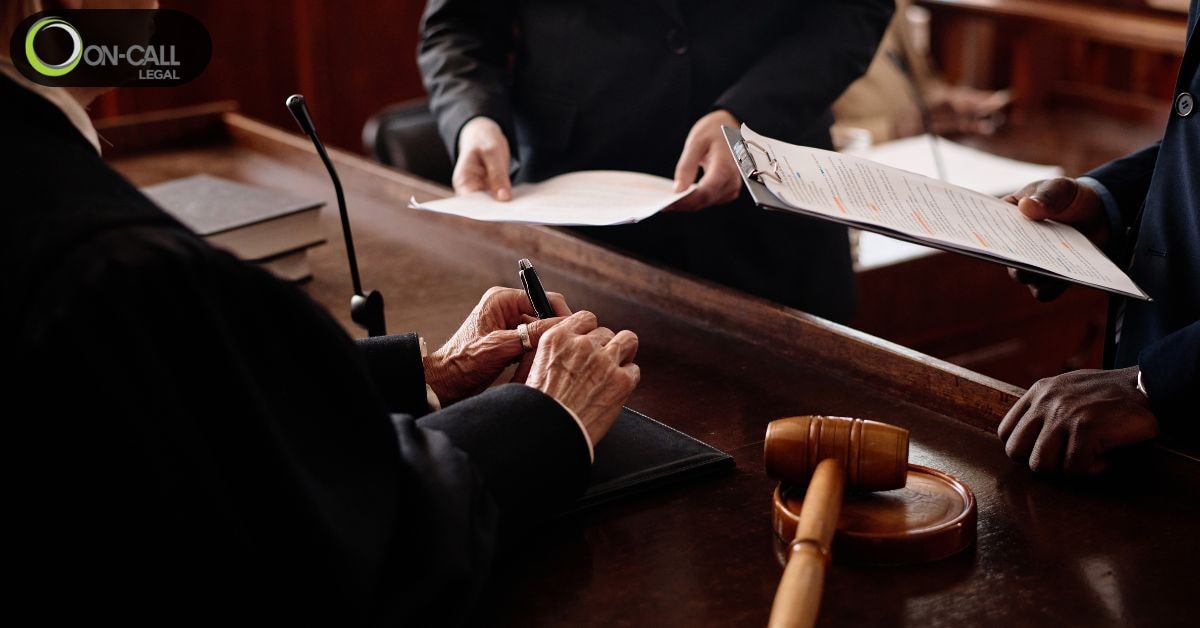
Improper service of court papers can have major legal consequences or even invalidate the entire process. Court cases can be delayed, dismissed, or even reversed if court documents are not properly served since the receiver can argue they were not informed of the legal proceeding. In the worst situation, improper service might lead to the setting aside of a default decision, necessitating a costly and time-consuming retrial of the whole case.
Moreover, improper service significantly impacts legal procedures. It can compromise the process’s fairness by depriving a party of their right to appropriate notice and a reply. This can result in a missed court date, unchallenged claims, or unintended judgments.
What if You Are Not Served Properly?
You must respond immediately if you feel you were not served properly. At On-Call Legal Process Servers, we will help you prove improper service. Obtaining proof that the service did not comply with legal standards, such as a lack of receipt or incorrect documentation, may be necessary in this situation. Our knowledgeable staff is here to assist in making sure that any legal proceedings taken against you are properly handled and that your rights are upheld.
Need a Professional Process Server?
We have discussed the key aspects of serving court papers, including a detailed look at who can legally serve them—private citizens, law enforcement, or professional process servers. We also discussed the various documents that can be served and the techniques to ensure proper service. Additionally, we explored the serious legal consequences of improper service and how it can impact the outcome of a case.
Serving court documents correctly is not only a formality; it is an essential aspect of the legal process that guarantees all parties are informed properly and have a chance to reply. Getting legal processes right the first time is crucial because improper service can result in them being postponed, dismissed, or even reversed.
We highly advise anyone serving court documents to use a professional process server. On-Call Legal Process Servers specialize in reliable, legally compliant process services. Our staff has the skill to handle even the most difficult situations, so you can be sure that your papers will be delivered on schedule and accurately.
Serving court documents is crucial and shouldn’t be left to chance. Contact us today to find out how we can help you maintain the integrity of your legal procedures and guarantee competent service.


On-demand legal services with arranging services from eFiling to organizing and preparing your subpoena for records and/or personal appearance and much more.